



HanchorBio and Aston Sci Join Forces to Unlock the Potential of Next-Generation Immunotherapy Through Cancer Vaccine Combinations
- Strategic collaboration pairs HCB101 (macrophage CD47-SIRPα blockade) with Aston Sci’s Phase 2 HER2-directed DNA vaccine (AST-301) to drive durable, dual innate/adaptive antitumor immunity
- Initial studies focus on gastric and breast cancers; expands to evaluate AST-301 and investigational PD-L1 cancer vaccines across multiple modalities
- Leverages FDA Orphan Drug Designations for both lead assets in gastric cancer to accelerate clinical pathways and global strategic partnering
[Taipei, Shanghai, San Francisco | October 22, 2026] – HanchorBio, Inc. (TWSE: 7827), a global clinical-stage biotechnology company developing innovative immunotherapies for cancer and immune-mediated diseases, and Aston Sci, Inc., a clinical-stage biotechnology company advancing next-generation immunotherapies, today announced a strategic research collaboration to evaluate novel combination therapies joining HanchorBio’s HCB101 macrophage-directed immunotherapy with Aston Sci’s therapeutic cancer vaccine candidates.
Established under a Memorandum of Understanding (MOU), the collaboration will initially evaluate HCB101 alongside Aston Sci’s lead candidate, AST-301, a HER2-directed plasmid DNA therapeutic vaccine currently in Phase 2 clinical trials. The companies will also explore combinations involving an investigational PD-L1 therapeutic vaccine, extending the collaboration across distinct vaccine modalities and immune mechanisms.
This strategic partnership advances HanchorBio’s strategy to integrate vaccine-directed immune education with macrophage-mediated immune activation, expanding market opportunities, potential clinical indications, and co-development partnerships for both organizations.
Bridging Vaccine-Directed Immune Education with Durable Macrophage Enhancement
Therapeutic cancer vaccines are experiencing renewed momentum across the biopharmaceutical sector, underscored by recent landmark Phase 3 readouts in mRNA neoantigen therapies. However, translating antigen-specific T-cell responses into durable, long-term clinical benefits remains a core challenge because immunosuppressive tumor microenvironments (TMEs) and immune evasion limit their persistence.
HanchorBio and Aston Sci aim to address these challenges by coordinating two arms of the immune system: pairing vaccine-driven adaptive T-cell priming with macrophage-driven innate tumor clearance, followed by antigen presentation that de novo activates additional tumor-reactive T-cell clones.
HCB101 is an engineered SIRPα–IgG4 Fc fusion protein developed through HanchorBio’s proprietary FBDB™ platform. Designed to block the CD47–SIRPα “don’t eat me” signal, HCB101 reactivates macrophage phagocytosis while minimizing red blood cell toxicity.
By combining HCB101 with Aston Sci’s therapeutic cancer vaccines, the companies intend to create a continuous, self-reinforcing immune loop:
Educate: Therapeutic vaccines generate robust, antigen-specific adaptive T-cell responses.
Execute: HCB101 unblocks tumor-associated macrophages to clear targeted cancer cells.
Amplify: Enhanced phagocytosis releases endogenous tumor neoantigens into the TME.
Re-Engage (Antigen Spreading): Broadened antigen presentation primes new T-cell clones, preventing immune escape and driving durable tumor suppression.
“Cancer vaccines are entering a new era, but teaching the immune system to recognize cancer is only part of the challenge,” said Scott Liu, PhD, Founder, Chairman, and CEO of HanchorBio. “We believe the next major breakthrough lies in connecting immune education with immune execution. By pairing HCB101 with Aston Sci’s vaccine platform, we aim to expand the utility of both pipelines and pioneer combination regimens that transcend traditional single-pathway therapies.”
Complementary Pipelines and Clinical Strategy
The initial translational research will combine HCB101 with AST-301, Aston Sci’s HER2-directed DNA vaccine currently in Phase 2 clinical development for breast and gastric cancers. Notably, both AST-301 and HCB101 have received U.S. FDA Orphan Drug Designation (ODD) for gastric cancer, establishing a validated regulatory foundation for future joint clinical development.
Preclinical and translational evaluations will measure antitumor efficacy, macrophage reactivation, T-cell kinetics, and epitope spreading beyond HER2. Follow-on studies will explore Aston Sci’s investigational PD-L1 cancer vaccine.
“Therapeutic cancer vaccines hold immense clinical promise, but unlocking their full potential requires pairing them with synergistic immune mechanisms,” said Wonil Kim, PhD, CSO of Aston Sci. Inc. “Partnering with HanchorBio allows us to evaluate how HCB101’s macrophage checkpoint blockade complements AST-301’s T-cell activation, opening an emerging immunotherapy for patients with hard-to-treat solid tumors.”
Path to Commercial and Strategic Value Creation
The joint strategy emphasizes rapid mechanistic validation to support future clinical co-development. Target indications include HER2-expressing gastric, gastroesophageal junction (GEJ), breast, and colorectal cancers, with a strategic focus on consolidation or maintenance settings to achieve chemotherapy-sparing, long-term tumor control.
“The right tumor biology, clinical setting, and combination strategy are critical to maximizing vaccine performance,” said Alvin Luk, PhD, MBA, CCRA, President and Chief Medical Officer (Group) and CEO (USA) of HanchorBio. “Our goal is to demonstrate that pairing immune priming with macrophage engagement leads to deeper, more durable responses. Success here could transform treatment paradigms across multiple solid tumor settings.”
Global Partnering at BIO-Europe 2026
Executive leadership from both HanchorBio and Aston Sci will attend BIO-Europe 2026 in Cologne, Germany (November 9–11, 2026) to present the scientific rationale behind the combination and to engage with potential global pharmaceutical partners and investors on next-generation immunotherapy and future strategic collaboration opportunities.
About HCB101
HCB101 is an investigational engineered SIRPα–IgG4 Fc fusion protein developed using HanchorBio’s proprietary FBDB™ platform. By blocking CD47–SIRPα signaling, HCB101 is designed to enhance macrophage-mediated antitumor immunity. It is currently being evaluated in ongoing Phase 1 monotherapy (NCT05892718) and Phase 1b/2a combination (NCT06771622) clinical studies and has received U.S. FDA Orphan Drug Designation for gastric cancer.
About HanchorBio
HanchorBio (TWSE: 7827) is a global clinical-stage biotechnology company developing next-generation biologics for cancer and immune-mediated diseases through its proprietary FBDB™ platform. Powered by a multifunctional protein-engineering technology, its clinical pipeline includes HCB101, HCB301, and HCB303. Operating across Taipei, Shanghai, and the San Francisco Bay Area, HanchorBio is committed to transforming patient outcomes through bi- and multi-specific biologics. For more information, visit: https://www.HanchorBio.com.
About AST-301
AST-301 (pNGVL3-hICD) is an investigational plasmid DNA therapeutic cancer vaccine encoding the intracellular domain of HER2. It is designed to elicit HER2-specific T-cell immunity. AST-301 is not approved for any use in any country. CornerStone-003 (NCT05771584) is a randomized, open-label, Phase 2 study evaluating the safety, immunogenicity, and preliminary efficacy of AST-301 in 24 patients with HER2-expressing gastric cancer after curative resection and standard systemic adjuvant treatment. More information is available at ClinicalTrials.gov. AST-301 has received U.S. FDA Orphan Drug Designation and Fast Track Designation for gastric cancer.
About Aston Sci
Aston Sci, Inc. is a South Korean clinical-stage biopharmaceutical company focused on discovering and developing innovative immunotherapies, including therapeutic cancer vaccines. Through its proprietary Th-Vac® platform, the company develops antigen-directed therapies engineered to induce durable, tumor-specific immune responses. Aston Sci.’s pipeline is led by AST301, a HER2-directed plasmid DNA cancer vaccine in Phase 2 clinical development for breast and gastric cancers, alongside multiple pipeline candidates targeting distinct immune pathways. For more information, visit: www.astonsci.com.
Forward-Looking Statements
This press release contains forward-looking statements concerning the proposed collaboration between HanchorBio and Aston Sci; anticipated preclinical and translational research; the potential biological and therapeutic activities of HCB101, AST301, and other investigational vaccine candidates; potential immune amplification, antigen spreading, and response durability; possible future clinical development; and broader therapeutic opportunities.
These statements are based on current expectations and involve risks and uncertainties that could cause actual results to differ materially. The proposed combination mechanisms have not been clinically validated, and the agreement does not guarantee the initiation or successful completion of specific research programs, clinical trials, regulatory submissions, or commercial development. Any future activities will depend on supporting evidence, applicable agreements, and relevant regulatory requirements.
Except as required by applicable law, HanchorBio undertakes no obligation to update these forward-looking statements.
HanchorBio Business Development Contact:
Email: [email protected]
Investor & Media Contact:
Email: [email protected]
漢康生技攜手 Aston Sci 展開策略合作 結合癌症疫苗與次世代免疫療法,探索創新聯合治療潛力
HCB101 結合 AST-301 癌症治療性疫苗,協同活化先天性與適應性免疫反應,推進多種實體腫瘤的創新治療策略
- 策略合作結合 HCB101 巨噬細胞導向 CD47–SIRPα 阻斷機制與 Aston Sci 已進入第二期臨床試驗的 HER2 標靶 DNA 癌症疫苗 AST-301,探索持久的先天性與適應性抗腫瘤免疫反應。
- 初期研究聚焦胃癌與乳癌,並將進一步評估 AST-301 及研發中 PD-L1 癌症疫苗的聯合應用,拓展不同疫苗技術與免疫機制的研究。
- HCB101 與 AST-301 均已取得美國 FDA 胃癌孤兒藥資格認定,為未來臨床開發及全球策略合作奠定基礎。
【台北、上海、舊金山,2026 年 10 月 22 日】-全球臨床階段生技公司漢康生技(TWSE:7827),致力於開發應用於腫瘤及免疫介導疾病的創新免疫療法,今日宣布與臨床階段生技公司 Aston Sci, Inc. 展開策略性研究合作,共同評估漢康生技巨噬細胞導向免疫療法 HCB101 與 Aston Sci 癌症治療性疫苗候選藥物的創新聯合治療策略。
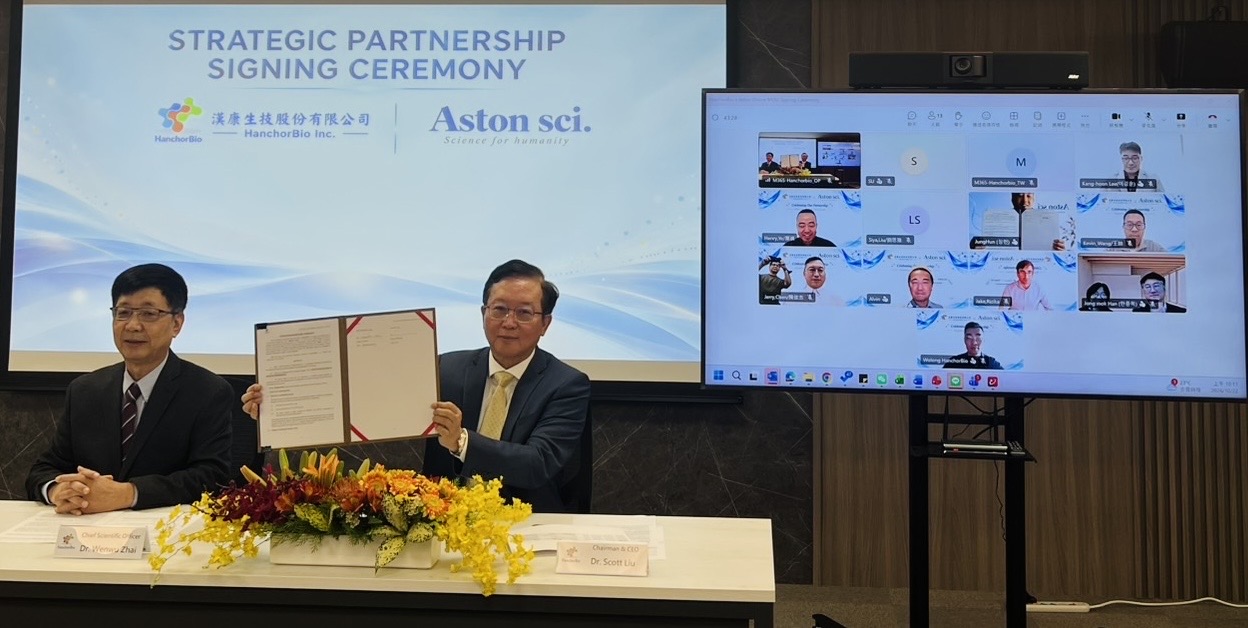
本次合作依據雙方簽署的合作備忘錄(MOU)展開,初期將評估 HCB101 與 Aston Sci 主要候選藥物 AST-301 的聯合應用。AST-301 為一款針對 HER2 的質體 DNA 治療性癌症疫苗,目前正進行第二期臨床試驗。雙方亦將探索與研發中 PD-L1 治療性疫苗的聯合應用,將合作範圍延伸至不同疫苗技術平台及免疫作用機制。
此項策略合作進一步推動漢康生技整合疫苗導向免疫辨識與巨噬細胞介導免疫活化的研發策略,並有望為雙方拓展市場機會、潛在臨床適應症及共同開發合作契機。
結合癌症疫苗免疫辨識與巨噬細胞活化,探索持久抗腫瘤免疫反應
近年來,治療性癌症疫苗在全球生物製藥產業重新受到關注,尤其是 mRNA 新抗原療法近期公布的重要第三期臨床研究結果,進一步凸顯此領域的發展潛力。然而,如何將抗原特異性 T 細胞反應轉化為持久的長期臨床受益,仍是癌症疫苗開發的重要挑戰。主要原因在於免疫抑制性腫瘤微環境(TME)及腫瘤免疫逃脫機制,可能限制免疫反應的持續性。
漢康生技與 Aston Sci 希望透過協同活化免疫系統的兩大機制來因應此挑戰:一方面利用癌症疫苗啟動適應性免疫系統中的 T 細胞反應,另一方面透過巨噬細胞介導的先天性免疫作用清除腫瘤細胞,並進一步藉由抗原呈現,從頭活化更多具有腫瘤辨識能力的 T 細胞株。
HCB101 為漢康生技運用自主 FBDB™ 平台開發的工程化 SIRPα–IgG4 Fc 融合蛋白,透過阻斷 CD47–SIRPα「別吃我」訊號,重新活化巨噬細胞的吞噬作用,同時降低對紅血球的毒性影響。
透過 HCB101 與 Aston Sci 治療性癌症疫苗的聯合應用,雙方期望建立持續且相互增強的免疫反應循環,包含四個關鍵階段:
- 免疫辨識(Educate): 治療性癌症疫苗誘導強效且具抗原特異性的適應性 T 細胞免疫反應。
- 免疫清除(Execute): HCB101 解除腫瘤相關巨噬細胞受到的抑制,促進其吞噬及清除癌細胞。
- 免疫放大(Amplify): 增強的吞噬作用促使腫瘤內源性新抗原釋放至腫瘤微環境。
- 免疫再活化(Re-Engage): 透過抗原擴展(Antigen Spreading)及更廣泛的抗原呈現,啟動新的 T 細胞株,以降低免疫逃脫風險,並促進持久的腫瘤抑制作用。
漢康生技創辦人、董事長暨執行長劉世高博士表示:「癌症疫苗正邁入新的發展階段,但讓免疫系統學會辨識癌細胞,只是其中一項挑戰。我們相信,下一個重要突破將來自於免疫辨識與免疫執行機制的有效連結。透過 HCB101 與 Aston Sci 癌症疫苗平台的結合,我們希望拓展雙方產品管線的應用價值,並開創超越傳統單一免疫路徑的新型聯合治療策略。」
互補性產品管線與臨床開發策略
初期轉譯研究將聚焦 HCB101 與 AST-301 的聯合應用。AST-301 為 Aston Sci 開發的 HER2 標靶 DNA 癌症疫苗,目前正針對乳癌與胃癌進行第二期臨床開發。
值得注意的是,AST-301 與 HCB101 均已獲得美國食品藥物管理局(FDA)授予胃癌孤兒藥資格認定(ODD),為未來雙方共同推進臨床開發提供既有的法規基礎。
雙方將透過臨床前及轉譯研究,評估聯合治療的抗腫瘤活性、巨噬細胞再活化、T 細胞動態變化,以及超越 HER2 抗原的表位擴展(Epitope Spreading)現象。後續研究亦將進一步探索 Aston Sci 研發中的 PD-L1 癌症疫苗。
Aston Sci 科學長Wonil Kim博士表示:「治療性癌症疫苗具有高度臨床發展潛力,但若要充分發揮其價值,必須結合具有協同作用的免疫機制。與漢康生技合作,使我們得以評估 HCB101 的巨噬細胞免疫檢查點阻斷機制,如何與 AST-301 的 T 細胞活化作用形成互補,為難治型實體腫瘤病人探索新興免疫治療策略。」
推進臨床共同開發與全球策略合作價值
雙方合作策略將著重於加速免疫作用機制的驗證,為未來臨床共同開發奠定基礎。
潛在目標適應症包括 HER2 表現的胃癌、胃食道交界部癌(GEJ)、乳癌及大腸直腸癌,並將策略性聚焦於鞏固治療(Consolidation Therapy)或維持治療(Maintenance Therapy)情境,探索降低化學治療依賴及實現長期腫瘤控制的可能性。
漢康生技集團總裁暨醫療長、美國子公司執行長陸英明博士表示:「選擇適當的腫瘤生物學特徵、臨床治療情境及聯合治療策略,是充分發揮癌症疫苗潛力的關鍵。我們的目標是驗證,結合免疫啟動與巨噬細胞活化,是否能帶來更深入且持久的治療反應。若能成功,將有機會改變多種實體腫瘤的治療模式。」
攜手參與 BIO-Europe 2026,拓展全球合作機會
漢康生技與 Aston Sci 的高階管理團隊將共同參與 2026 年 11 月 9 日至 11 日於德國科隆舉行的 BIO-Europe 2026 國際生技合作大會,向全球產業夥伴介紹此次聯合治療策略的科學基礎,並與潛在國際藥廠合作夥伴及投資人交流,探索次世代免疫療法及未來策略合作機會。
關於 HCB101
HCB101 為漢康生技運用自主 FBDB™ 平台開發的研究中新藥,屬於工程化 SIRPα–IgG4 Fc 融合蛋白。透過阻斷 CD47–SIRPα 訊號傳遞,HCB101 旨在增強巨噬細胞介導的抗腫瘤免疫反應。
目前 HCB101 正進行第一期單藥臨床試驗(NCT05892718)及第一期 b/第二期 a 聯合治療臨床試驗(NCT06771622),並已獲得美國 FDA 授予胃癌孤兒藥資格認定。
關於漢康生技
漢康生技(TWSE:7827)是一家全球臨床階段生技公司,致力於運用自主開發的 FBDB™ 平台,研發應用於癌症及免疫介導疾病的次世代生物藥。
憑藉多功能蛋白質工程技術,漢康生技已建立涵蓋 HCB101、HCB301 及 HCB303 的臨床產品管線。公司於台北、上海及美國舊金山灣區設有營運據點,致力於透過雙特異性及多特異性生物藥開發,改善病人的治療結果。
關於 AST-301
AST-301(pNGVL3-hICD)為一款研究中的質體 DNA 治療性癌症疫苗,透過編碼 HER2 的細胞內結構域,誘導 HER2 特異性 T 細胞免疫反應。AST-301 目前尚未獲得任何國家核准上市或使用。
CornerStone-003(NCT05771584)是一項隨機分配、開放標籤的第二期臨床試驗,針對 24 名已接受根治性手術切除及標準全身性輔助治療的 HER2 表現型胃癌病人,評估 AST-301 的安全性、免疫原性及初步臨床活性。
更多試驗資訊可參閱 ClinicalTrials.gov。AST-301 已獲得美國 FDA 授予胃癌孤兒藥資格認定及快速審查資格(Fast Track Designation)。
關於 Aston Sci
Aston Sci, Inc. 為韓國臨床階段生物製藥公司,專注於創新免疫療法的研究與開發,包括治療性癌症疫苗。
透過自主開發的 Th-Vac® 平台,Aston Sci 致力於開發抗原導向療法,以誘導持久且具腫瘤特異性的免疫反應。
其主要候選藥物 AST-301 為 HER2 標靶質體 DNA 癌症疫苗,目前正針對乳癌及胃癌進行第二期臨床開發。公司亦擁有多項針對不同免疫路徑的候選藥物。
更多資訊請參閱:www.astonsci.com
前瞻性聲明
本新聞稿包含有關漢康生技與 Aston Sci 擬議合作、預期進行的臨床前及轉譯研究、HCB101、AST-301 及其他研究中疫苗候選藥物的潛在生物學與治療作用,以及免疫反應放大、抗原擴展、反應持續性、未來可能的臨床開發及更廣泛治療應用機會等前瞻性聲明。
上述聲明係基於目前的預期,並涉及風險與不確定性,實際結果可能與預期存在重大差異。相關聯合治療機制尚未經臨床驗證,且本次合作協議不保證特定研究計畫、臨床試驗、法規申請或商業開發活動必然啟動或成功完成。任何未來活動均須視支持性研究證據、適用協議及相關法規要求而定。
除適用法律另有規定外,漢康生技不承擔更新上述前瞻性聲明的義務。