



HanchorBio Receives Silver Award at the 2026 National Pharmaceutical Technology and Research Development Award, Recognizing HCB101’s Innovative Immunotherapy Development
HCB101’s differentiated macrophage-directed immunotherapy mechanism bridges innate and adaptive immune responses, highlighting its potential in next-generation cancer immunotherapy and clinical development
[Taipei, Shanghai, San Francisco | November 18, 2026] – HanchorBio, Inc. (TWSE: 7827), a global clinical-stage biotechnology company developing next-generation immunotherapies for oncology and immune-mediated diseases, announced that its proprietary investigational immunotherapy candidate HCB101 has received the Silver Award at the 2026 National Pharmaceutical Technology and Research Development Award (NPRDA), jointly organized by Taiwan’s Ministry of Health and Welfare and Ministry of Economic Affairs. The recognition highlights HanchorBio’s achievements in innovative drug development, differentiated mechanisms of action, and clinical translational research. The award ceremony was held at the National Biotechnology Research Park in Taipei, Taiwan.
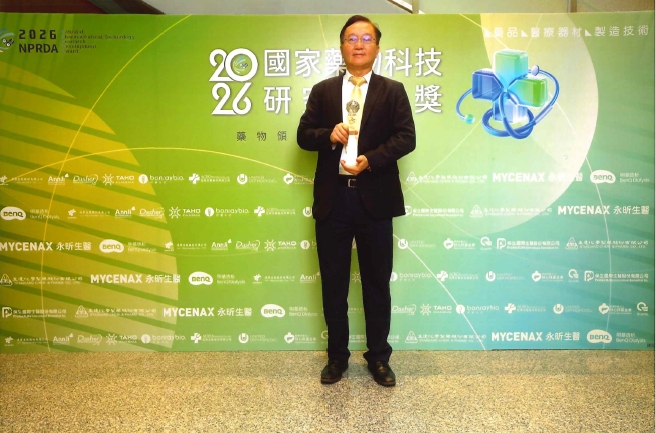
The National Pharmaceutical Technology and Research Development Award is one of Taiwan’s prominent national awards recognizing innovation in pharmaceutical research, drug development, and related manufacturing technologies, with the aim of advancing domestic pharmaceutical innovation and industry development. HCB101’s recognition underscores HanchorBio’s long-term commitment to proprietary drug discovery and development, its differentiated research strategy centered on macrophage-directed immunotherapy, and the Company’s potential to further expand its presence in the global cancer immunotherapy landscape.
“Receiving the award for HCB101 is an important recognition of HanchorBio’s research and development capabilities and our team’s commitment to innovative drug development,” said Dr. Scott Liu, Chairman and Chief Executive Officer of HanchorBio. “We believe the future of cancer immunotherapy should not be limited to targeting a single immune pathway, but should instead involve more comprehensive activation of both the innate and adaptive immune systems. By targeting macrophage-mediated immune mechanisms, HCB101 is designed to promote tumor cell phagocytosis and antigen presentation, potentially enabling broader and more durable antitumor immune responses. This approach reflects our continued commitment to advancing the FBDB™ platform and exploring the next generation of immunotherapies.”
HCB101 Differentiates Itself Through Macrophage-Directed Immunotherapy
Current cancer immunotherapies are predominantly focused on T cell-directed approaches, including PD-1/PD-L1 immune checkpoint inhibitors, CAR-T cell therapies, and T cell-engaging antibodies. However, some patients do not achieve optimal therapeutic responses due to insufficient tumor antigen presentation, inadequate populations of tumor-reactive T cells, or immunosuppressive factors within the tumor microenvironment. These limitations highlight the significant unmet medical needs that remain in cancer immunotherapy.
Unlike conventional T cell-directed immunotherapies, HCB101 was designed using HanchorBio’s proprietary FBDB™ platform to target macrophages and the myeloid immune system. By blocking the CD47-SIRPα “don’t-eat-me” signaling pathway, HCB101 is designed to enhance macrophage recognition and phagocytosis of tumor cells, thereby increasing tumor antigen processing and presentation and creating favorable conditions for subsequent T cell-mediated immune responses.
HCB101’s core differentiation extends beyond enhancing macrophage-mediated tumor cell phagocytosis. Through sustained antigen presentation, HCB101 has the potential to promote the de novo formation of tumor-reactive T cell clones, expansion of existing T cell clones, and development of immunological memory. By connecting innate and adaptive immunity, this mechanism may broaden and sustain antitumor immune responses.
Compared with conventional immune checkpoint inhibitors, which primarily act by relieving inhibitory signals on T cells, HCB101 represents a distinct therapeutic strategy that targets earlier stages of immune activation, offering potential complementary and combination treatment opportunities with existing immunotherapies.
HCB101 Clinical Progress Supports Global Development Strategy
HanchorBio’s preclinical studies have shown that, in addition to enhancing tumor cell phagocytosis, HCB101 is associated with increased antigen-presenting cells, enhanced T cell infiltration and activation, and improvements in the tumor immune microenvironment. These findings provide scientific support for its proposed mechanism of bridging innate and adaptive immune responses.
In clinical development, HCB101 has demonstrated preliminary antitumor activity across multiple solid tumor studies. According to recent clinical data in second-line gastric cancer and gastroesophageal junction cancer, HCB101-based combination therapy achieved an objective response rate (ORR) of 62.5% at intermediate doses (5–8 mg/kg), compared with an ORR of approximately 28% reported for standard-of-care treatment, along with a disease control rate (DCR) of 100%.
In second-line microsatellite-stable (MSS) colorectal cancer, tumor responses and disease control have also been observed across different combination regimens, supporting further clinical investigation. These findings remain preliminary and require validation in larger clinical trials.
HanchorBio continues to advance HCB101’s global clinical development strategy. Through ongoing interactions with the U.S. Food and Drug Administration (FDA) and other regulatory authorities, the Company is planning future pivotal clinical trials to further evaluate HCB101’s clinical potential across different solid tumor indications.
Advancing Global Clinical Development and International Collaborations to Expand the Innovative Immunotherapy Pipeline
In addition to advancing clinical studies of HCB101 in gastric cancer, colorectal cancer, and head and neck cancer, HanchorBio will continue integrating biomarker analyses and translational research to deepen its understanding of macrophage-directed immune mechanisms and explore development opportunities across additional tumor types and combination treatment strategies.
The Company is also leveraging its proprietary FBDB™ platform to expand its portfolio of multifunctional immunotherapies. By integrating in-house research and development, global clinical development, and collaborations with international pharmaceutical companies, HanchorBio aims to advance the clinical and commercial development of innovative therapeutics.
Receiving the Silver Award at the National Pharmaceutical Technology and Research Development Award not only recognizes HCB101’s research and development achievements, but also reinforces HanchorBio’s commitment to deepening international research collaborations and advancing the next generation of cancer immunotherapies.
About HanchorBio
HanchorBio (TWSE: 7827) is a global clinical-stage biotechnology company pioneering next-generation immuno-oncology therapies through its proprietary Fc-Based Designer Biologics (FBDB™) platform. By combining multi-axis targeting with tuned immune effector engagement, HanchorBio develops breakthrough therapeutics that overcome tumor resistance mechanisms across innate and adaptive pathways. Operating across Taipei, the San Francisco Bay Area, and Shanghai, HanchorBio is advancing a clinical and preclinical pipeline spanning multi-functional fusion proteins for hard-to-treat solid tumors and autoimmune disorders. For more information, visit: www.HanchorBio.com.
Forward-Looking Statements
This press release contains forward-looking statements regarding HanchorBio’s investigational products, proprietary technologies, clinical development programs, potential therapeutic applications, and future combination strategies. These statements involve scientific, clinical, regulatory, operational, and commercial risks and uncertainties. Preliminary clinical and preclinical findings may not predict future outcomes, and adequately controlled clinical trials have not established the safety, efficacy, and incremental clinical benefit of HanchorBio’s investigational therapies. Actual results and future development activities may differ materially from current expectations. Except as required by applicable law, HanchorBio undertakes no obligation to update or revise these statements.
HanchorBio Business Development Contact:
Email: [email protected]
Investor & Media Contact:
Email: [email protected]