


The core technology of HanchorBio is the FBDB™ (Fc-Based Designer Biologics) platform, which focuses on the development of next-generation immuno-oncology fusion protein therapeutics. This platform utilizes the antibody Fc region as a backbone, onto which various engineered anti-cancer molecules are constructed through protein engineering. Combined with AI-assisted drug design capabilities, this technology is dedicated to overcoming key challenges in tumor immunotherapy.
Over 160 antibody drugs have already been approved by global regulatory agencies, including 17 bispecific antibodies.
Globally, no tri-functional antibodies or fusion proteins have been approved to date.
Among the more than 2,400 antibody or fusion protein candidates currently in clinical development, tri-functional biologics remain rare and valuable, accounting for only 1.6% of all projects worldwide.
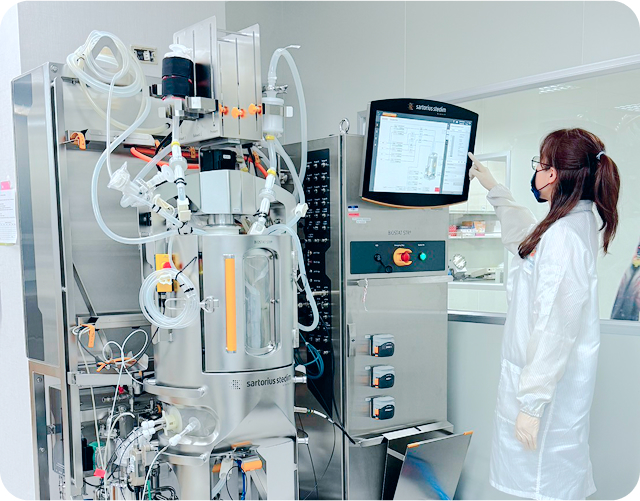

We specialize in addressing the challenges of highly complex fusion protein drug development, tailoring the most suitable manufacturing processes and analytical strategies. At every critical stage where every second counts, our team defines process parameters that ensure both patient safety and drug quality, establishing rigorous Quality Control (QC) methods to guarantee product integrity and safety, driving projects forward efficiently.
Leveraging in-house innovation and agility, HanchorBio has successfully established the capability to independently develop processes and analytical methods for novel fusion proteins, delivering forward-looking and competitive biopharmaceutical solutions for partners and the market.
We focus on complex fusion protein drug development, designing the most appropriate manufacturing processes and analytical strategies. By offering innovative biologic technologies that are difficult to replicate, we combine efficacy, safety, and cost-effectiveness to deliver breakthrough solutions for global cancer treatment.

Through genetic engineering and protein fusion technologies, we precisely target multiple antigens to design highly specific anti-cancer molecules. HanchorBio’s core technologies are protected by strong patents and offer differentiated competitiveness, establishing a key advantage in the global biotech landscape

Our technology platform flexibly combines multiple anti-tumor molecules into a single biologic. This approach not only achieves immune synergy and enhances therapeutic efficacy but also reduces side effects, ensuring better safety and treatment outcomes.

Demonstrated strong efficacy and favorable safety across multiple animal tumor models, with a clear mechanism of action (MoA) that supports the development of both monotherapy and combination therapies. The drug design significantly reduces manufacturing and clinical costs while achieving high expression levels, high purity, and stability, making it an innovative and cost-effective therapeutic option.